

Play the Game: Into the Void
Brief:
“This should be a significant piece of digital writing, created using Twine.
You should aim for the reader to be able to experience the majority of your project over a 5-8 minute period.
This might involve them restarting and choosing different branches, or it might involve them spending more time reading your text before making decisions. “
About the game:
Early narrative prototype
Engine: Twine
Team Size: One
Development time: 2 months
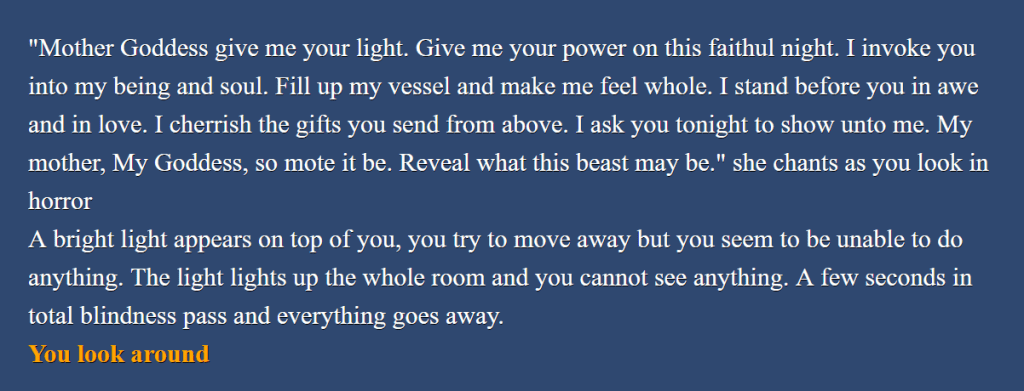
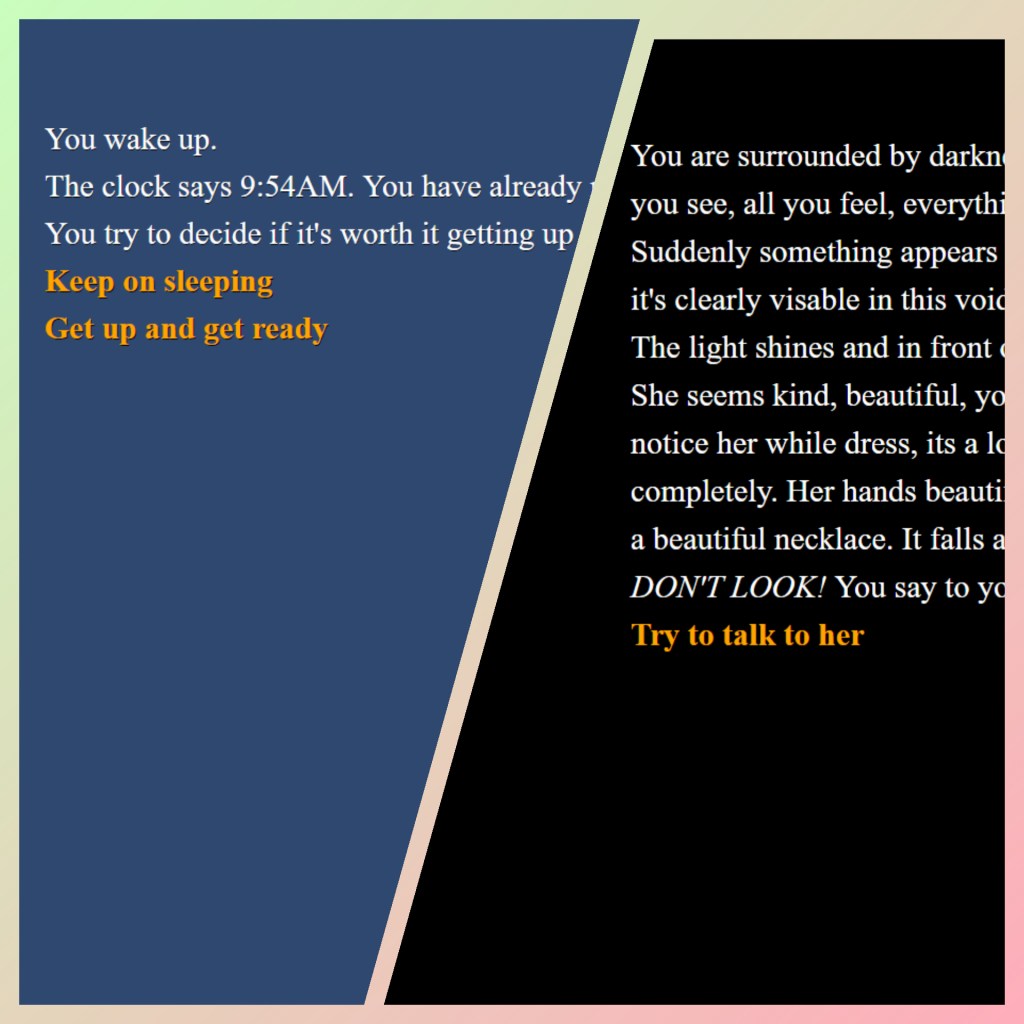
This project is an experimental branching narrative that explores power, identity, and consequence through a fantasy setting. The story follows a teenage protagonist who is unexpectedly reborn into a magical world and gradually discovers their overwhelming power. Rather than focusing on heroic reward, the narrative challenges traditional fantasy tropes by exploring how power can lead to fear, rejection, and unintended destruction.
The prototype was intentionally focused on narrative structure and choice rather than visual or technical complexity.
My Role and Contributions
- Developed the narrative concept, setting, and character arc
- Designed branching story paths and player choice structures
- Implemented all narrative logic and branching using Twine
- Focused on pacing and readability rather than visual effects
- Explored how player choice could subvert familiar fantasy expectations
This project prioritised narrative experimentation and player agency over mechanical systems.
Design Intent:
The primary design goal was to explore how player expectation could be challenged within a familiar genre. By positioning the protagonist as exceptionally powerful, the narrative shifts focus away from progression and toward consequence. The story examines how actions, even when successful, can lead to social and moral fallout.
The branching structure was designed to encourage replay, allowing players to explore different responses and outcomes across multiple playthroughs.
Reflection:
This prototype was not completed for its original coursework due to scope. The narrative grew beyond the intended length and complexity of the brief, which required me to pivot to a smaller project. However, this experience was valuable in highlighting the importance of scope control and narrative focus.
Working on this prototype helped me develop stronger planning skills and a clearer understanding of Twine as a tool for branching storytelling. The lessons learned here directly informed my later Twine project, which was completed more efficiently and with greater narrative clarity.
If revisited, I would refine the narrative structure, tighten scope, and bring the story to completion while preserving its focus on subverting fantasy expectations.
 kgaming.online