
For my final-year dissertation, I investigated how different onboarding approaches influence player understanding, engagement and progression. The project focused on identifying which onboarding methods best support new players and reduce confusion during the early stages of gameplay.
The research combined player feedback, behavioural analysis and comparative evaluation to better understand how onboarding design impacts the overall player experience.
Research Question
How do different onboarding approaches affect player understanding, engagement and progression?
Research Overview:
| Area | Details |
| Project Type | Final Year Dissertation |
| Research Methods | Survey Research, Behavioural Analysis, Comparative Testing |
| Survey Participants | 1,000 |
| Playtest Participants | 18 |
| Onboarding Variations | Forced, Optional, No Tutorial |
| Outcome | Evidence-Based Onboarding Recommendations |
| Skills Applied | Research, Analysis, Problem Solving |
Effective onboarding is critical to player retention, engagement and long-term satisfaction. Poor onboarding can overwhelm new players, create confusion and increase the likelihood of early disengagement.
This research explored how onboarding design influences player understanding and identified practical recommendations for improving the early player experience.
Key Highlights:
📊 1,000+ Survey Responses
Large-scale player feedback analysis
🧪 3 Onboarding Variations
Forced, Optional & No Tutorial
🎮 18 Playtest Participants
Controlled onboarding evaluation
📈 Evidence-Based Findings
Recommendations for player retention
Industry Relevance
This research demonstrates the practical application of player research, survey design, behavioural analysis and evidence-based decision making. The findings have relevance across game development, user experience, onboarding design, community engagement and customer experience roles where understanding user behaviour is essential to improving outcomes.
Research Process
Phase 1 – Large Scale Player Survey
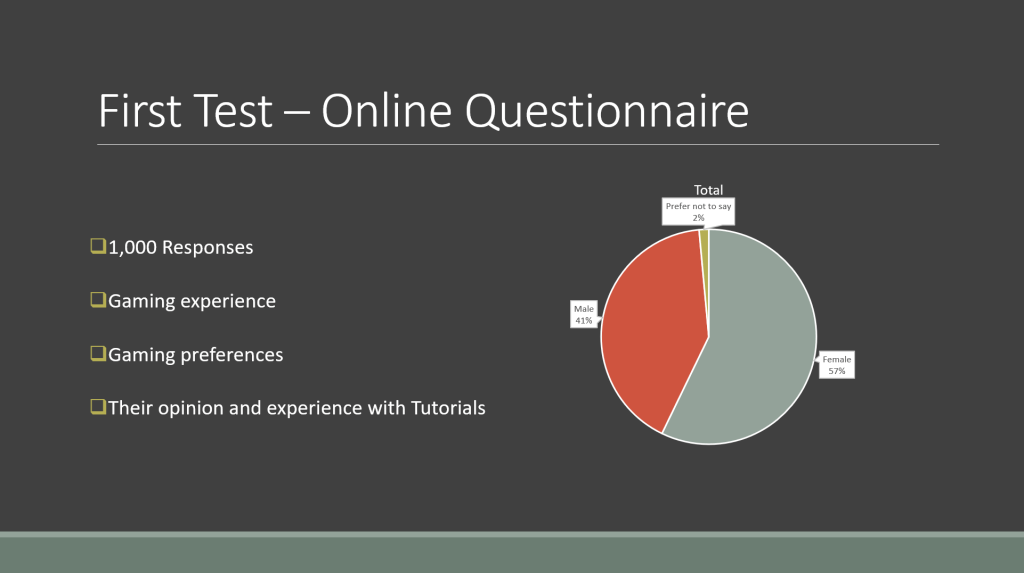
Conducted an online survey with over 1,000 participants to understand player preferences, gaming experience and attitudes towards tutorials and onboarding systems. The survey provided quantitative data used to identify common onboarding challenges and preferred learning methods.
Key Outcomes:
- 1,000+ responses collected
- Mixed gaming experience levels represented
- Player attitudes towards tutorials analysed
- Identified preferred onboarding approaches
- Informed design of practical onboarding tests
Phase 2 – Controlled Gameplay Testing
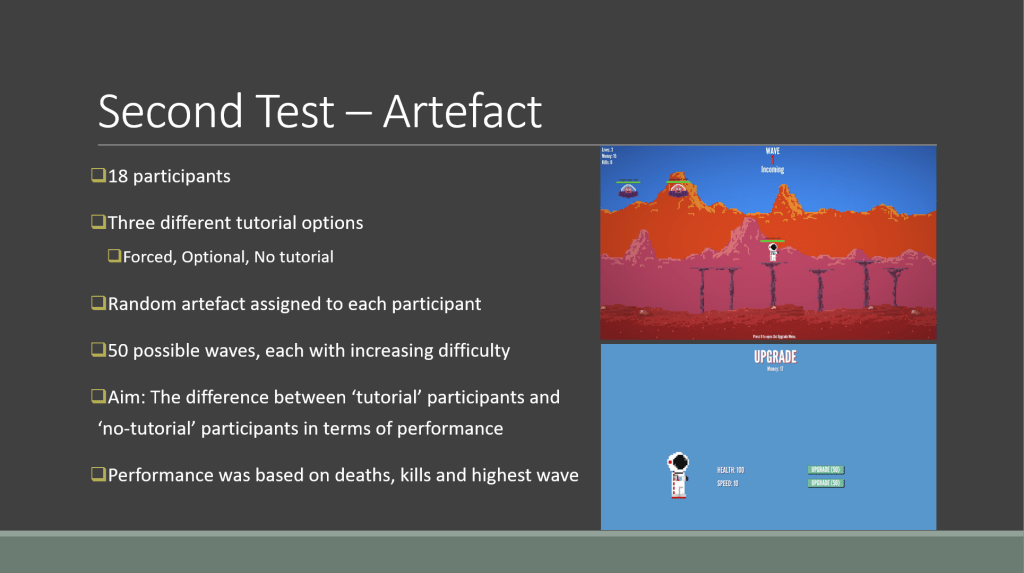
Conducted controlled gameplay testing with 18 participants using a custom-developed game prototype. Participants were assigned different onboarding conditions to evaluate how tutorial design affected player performance, understanding and progression.
Testing Conditions:
- Forced Tutorial
- Optional Tutorial
- No Tutorial
Performance Metrics:
- Highest wave reached
- Kill count
- Death count
- Progression rate
- Player understanding
My Role:
- Designed and planned the research project
- Developed questionnaires and research materials
- Designed and distributed a large-scale player survey (1,000+ responses) and developed a controlled gameplay testing environment to evaluate onboarding effectiveness
- Conducted behavioural and comparative analysis
- Produced evidence-based recommendations
- Presented findings through reports, presentations and academic posters
Methodology:
- Mixed-method research approach combining a large-scale survey of 1,000+ participants with controlled gameplay testing involving 18 participants
- Survey and questionnaire design
- Comparative evaluation of onboarding approaches
- Behavioural analysis of player experiences
- Thematic categorisation of participant feedback
- Structured data collection and interpretation
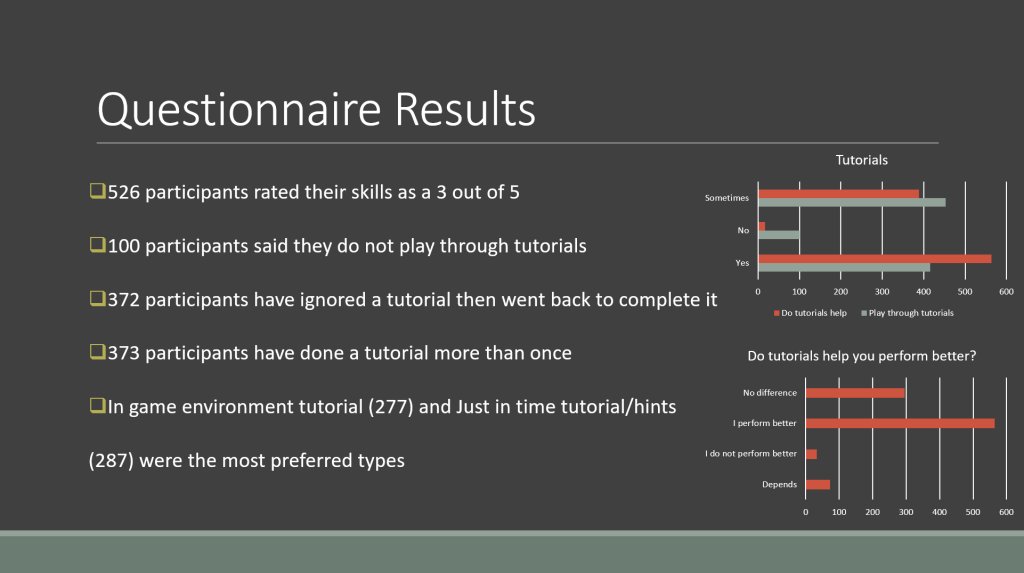
Questionnaire responses provided quantitative and qualitative insight into player preferences, tutorial engagement and perceived effectiveness. Results were analysed alongside gameplay performance data to identify relationships between onboarding design, player confidence and progression.
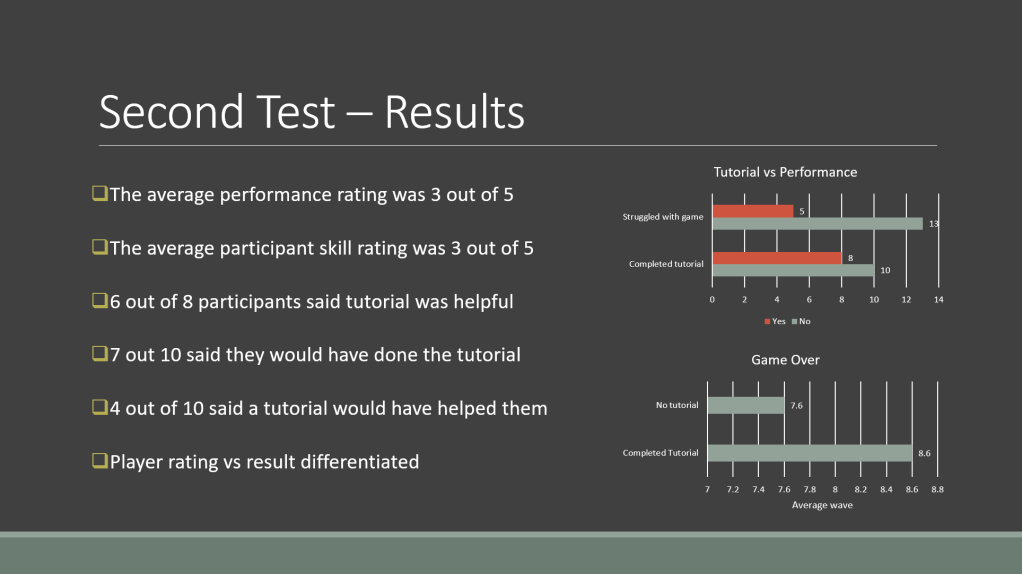
Analysis of gameplay performance demonstrated measurable differences between onboarding conditions. Participants who completed tutorials generally progressed further and reported greater confidence in understanding game systems. Findings supported the conclusion that structured onboarding can improve early player experience and reduce confusion during initial gameplay.
Survey Research & Feedback Analysis
To support the research, surveys were designed and distributed to players with varying levels of experience. Responses were analysed to identify patterns relating to onboarding effectiveness, player confidence, engagement and progression.
Quantitative and qualitative feedback was categorised and compared to identify recurring themes, helping identify strengths and weaknesses across different onboarding approaches.
Findings were combined with behavioural observations and comparative analysis to develop evidence-based recommendations for improving player onboarding experiences.
Key Findings:
- Players responded more positively to onboarding that provided gradual information rather than overwhelming tutorials.
- Clear guidance and progressive learning improved player confidence and understanding.
- Confusing onboarding experiences negatively affected engagement and willingness to continue playing.
- Players preferred learning through interaction and discovery when supported by clear visual and contextual guidance.
Project Deliverables
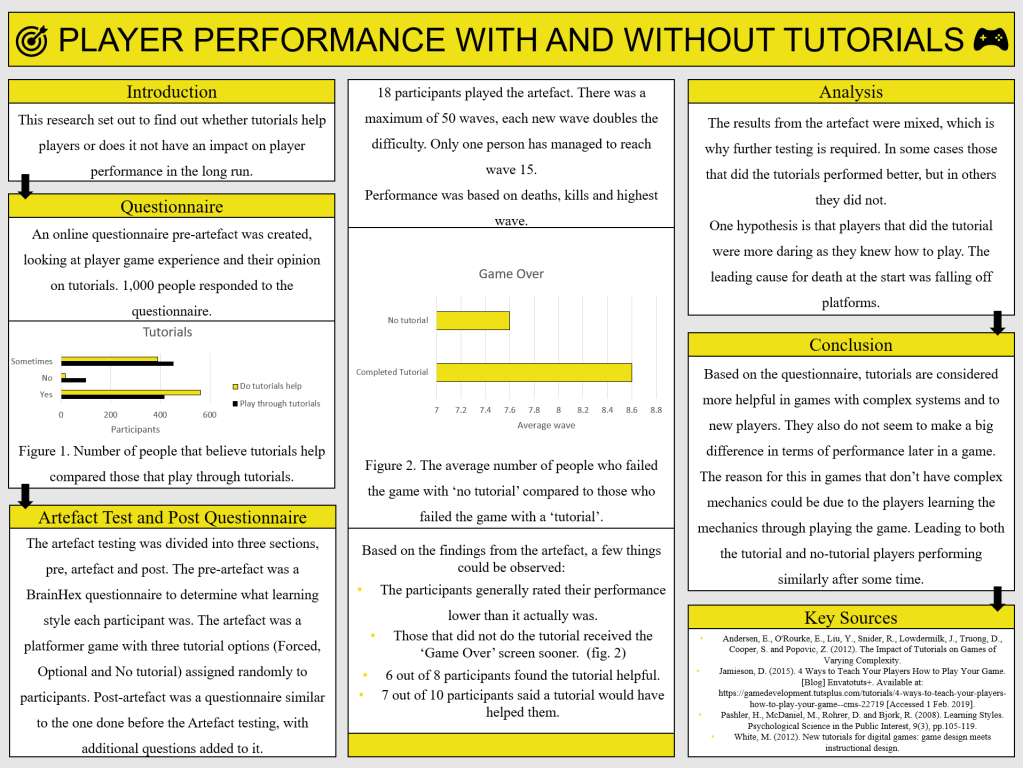
Findings were presented through a written dissertation, research presentation, academic poster and supporting analysis materials.
Recommendations:
- Introduce information gradually rather than presenting everything at once.
- Reinforce learning through gameplay rather than lengthy tutorials.
- Use visual cues and contextual guidance to support player understanding.
- Reduce unnecessary complexity during the early stages of gameplay.
- Continuously gather player feedback and iterate on onboarding systems.
Skills Demonstrated:
- Research Design
- Survey Creation
- Data Analysis
- Behavioural Analysis
- Player Research
- Presentation Skills
- Problem Solving
- Evidence-Based Decision Making
Through this research, I developed practical experience in user research, survey design, playtesting, behavioural analysis and evidence-based decision making. By combining feedback from over 1,000 players with controlled gameplay testing, the project demonstrated how data and user insight can be used to improve onboarding experiences, reduce confusion and support long-term engagement. These skills are directly applicable to user experience, community management, customer insight and engagement-focused roles where understanding user behaviour is essential to improving outcomes.
 kgaming.online
You must be logged in to post a comment.